Getting Past the Guesswork
Early in my career I worked on a complete redesign of a client's landing page. The new design looked beautiful, the copy was crisp, and everyone in the room felt proud. We launched it on a Friday afternoon, expecting champagne. Instead, the bounce rate jumped and the click-through rate on the main call to action dropped by nearly a third. That experience taught me something no course ever could: what looks right in a mockup often fails in the wild. The only reliable way to know what works is to run careful, structured experiments.
That is where a/b testing comes into play. It is a simple concept - show two versions of a page to different visitors and see which one performs better. But the simplicity hides a lot of nuance. Doing it well means understanding statistical significance, avoiding common pitfalls, and treating every test as a small piece of a larger learning process.
What A/B Testing Actually Measures
At its core, a/b testing compares two variants of a single element. It could be the color of a button, the wording of a headline, the placement of a form, or even the layout of an entire section. You split your traffic between the control (the original) and the variation, then measure which one achieves your goal - a purchase, a sign-up, a download - at a higher rate.
The key is focusing on one change at a time. If you alter the headline and the image and the button color all at once, you will not know which change caused the result. That kind of multivariate testing has its place, but it requires much more traffic and a more careful setup. For most teams, a simple split test on a single hypothesis gives clearer answers faster.
Building a Hypothesis First
Before you ever open an a/b testing tool, you need a hypothesis. A hypothesis starts with data. Look at your website analytics. Where are people dropping off? Which pages have high bounce rates but decent traffic? Maybe your product page gets plenty of visits but very few add-to-cart clicks. That tells you something about the user experience on that page.

From there, form a guess about why. Perhaps your call to action blends into the background. Perhaps the copy does not match the visitor's intent. Perhaps the page takes too long to load on mobile. Each hypothesis points toward a specific change you can test.
I have seen teams skip this step and test random elements - button colors, font sizes, image rotations - without any theory behind them. They almost always end up with inconclusive results. A good hypothesis gives your test direction and makes the results meaningful even when the variation loses.
Choosing the Right Tool for the Job
There are plenty of tools out there, each with its own strengths. Google Optimize is a solid free option if you are already using Google Analytics. It integrates cleanly and lets you set up basic experiments without much overhead. Optimizely offers more advanced features like personalization and server-side testing, which can be powerful if you have a dedicated optimization team. VWO is another strong contender, especially for running multivariate tests and managing multiple experiments at once.
But the tool is never the most important part. I have watched people obsess over which a/b testing tool to use while ignoring the fundamentals of sample size and test duration. A $500 tool run poorly will give you worse results than a free tool run correctly. Focus on the process first, then pick the tool that fits your workflow.
Sample Size and Statistical Significance
This is where many well-intentioned tests fall apart. You launch a test, check it after a few hours, see a winner, and declare victory. But a few hours is rarely enough time to reach statistical significance. The early data can be heavily skewed by time-of-day effects, bot traffic, or just random variation.
Use a sample size calculator before you start. It will ask for your baseline conversion rate and the minimum effect you care about detecting. If you have 10,000 monthly visitors and your current conversion rate is 5%, the calculator will tell you how many visitors per variation you need. Often it is in the thousands. Running a test for less than a full business cycle - at least one week, ideally two - helps account for differences between weekdays and weekends.
I once worked on a test where the variation outperformed the control by 15% after three days. We were tempted to stop early. But we let it run for ten more days, and by the end the difference had shrunk to 2% and was not statistically significant. Stopping early would have led us to make a change that hurt performance in the long run.
Beyond the Button: What Else to Test
Most people start with visible page elements like headlines and buttons. Those are fine places to begin, but there is more to experiment with. The structure of your navigation, the wording of error messages, the timing of a pop-up, the length of a form - every touchpoint is a candidate for improvement.
Consider testing the placement of trust signals. A testimonial near the call to action might outperform one placed at the bottom of the page. A visible money-back guarantee might lift conversions more than a discount code. These are not guesses you can make from a conference room. You have to let the data speak.
Session recording and heatmap tools can feed into your testing process. Watch how real users behave on your pages. Where do they hover? Where do they click but nothing happens? Where do they scroll past important information? Those observations generate hypotheses that are grounded in actual behavior, not assumptions.
When A/B Testing Struggles
A/b testing is not a cure-all. It works best when you have enough traffic to reach significance in a reasonable time. If your site gets a few hundred visitors a month, running a proper test could take months. In that case, focus on qualitative methods like user interviews or usability tests instead.
It also struggles with big, structural changes. Redesigning an entire checkout flow involves so many variables that a simple split test cannot isolate the effect of any single change. For those situations, you might run a multivariate test or use a staged rollout where you gradually expose more users to the new flow and monitor overall metrics.
And sometimes the results are just confusing. You test a change that you were sure would improve things, and it loses. Or it wins but the improvement is tiny. That is fine. Not every test needs to be a win. The goal is learning, not always improving. A failed test that confirms a hypothesis is still useful knowledge.
Making It Part of Your Culture
The biggest challenge I see in organizations is not technical. It is cultural. Teams run a few tests, get mixed results, and then abandon the practice entirely. Or they run tests but ignore the results because the winning variation does not match someone's opinion. Optimization requires consistency and humility.
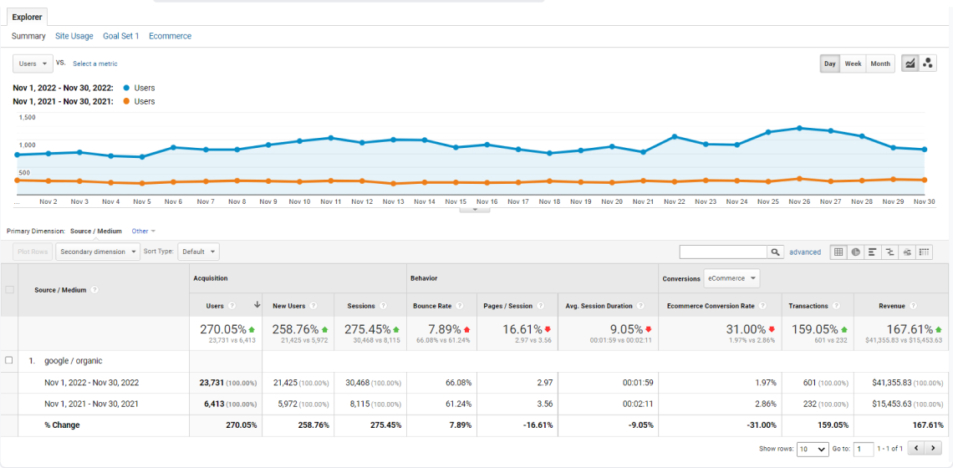
One way to build a testing culture is to start small. Pick one high-traffic page, form a hypothesis, run a test, and share the results openly. Even a small win builds momentum. Over time, you shift from "I think this works" to "the data shows this works." That shift changes how decisions are made across the entire site.
Wrapping It All Together
Conversion rate optimization is not about hunches or design awards. It is about running structured experiments and letting the numbers guide your next move. A/b testing is the most practical way to do that, provided you respect the rules of sample size, duration, and statistical significance. Combine it with good website analytics, session recordings, and heatmaps, and you have a system that continuously improves your user experience and your business results.
The next time someone in a meeting says "I think the button should be green," ask them how they know. Then suggest running a test. You might not get the green button, but you will get something better: an answer you can trust.